
Treasury says freezing R13.5bn for 69 municipalities should not disrupt services
If municipalities address unauthorised, irregular, and fruitless and wasteful expenditure, funds could be released within the month
 Add GroundUp on Google
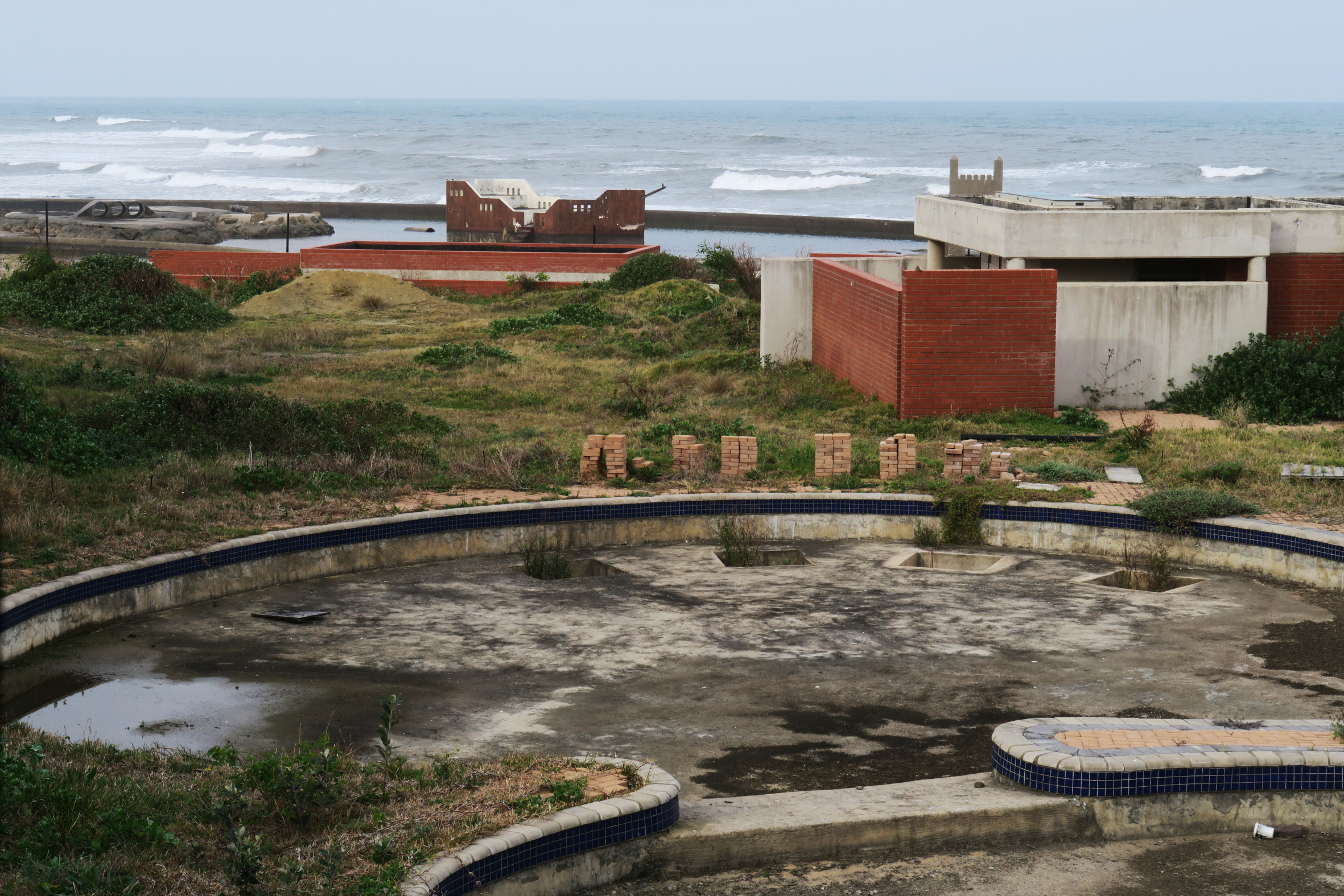
Abandoned infrastructure, such as the ill-fated Water World project in KuGompo City, are a hallmark of financially mismanaged municipalities. As a corrective action against financial mismanagement, National Treasury has withheld the July equitable share transfers to 69 municipalities. Buffalo City Metropolitan Municipality, where R125-million was spent on the now abandoned Water World, is one of them. Archive photo: Steve Kretzmann
- National Treasury’s July equitable share transfer to 69 financially mismanaged municipalities has been temporarily frozen.
- Officials say municipalities can avoid service disruption by using their own revenue while submitting creditor-backed payment plans and complying with reporting requirements.
- The South African Local Government Association says structural problems, including R480-billion in consumer debt, rising bulk service costs and weak local economies, are placing municipalities under severe financial distress.
National Treasury insists that its withholding of R13.5-billion in equitable share transfers to 69 municipalities should not affect service delivery.
This is according to deputy director-general Ogalaletseng Gaarekwe, speaking at a media briefing in Pretoria on Wednesday morning, a day after National Treasury announced the “temporary” withholding of the July transfers.
The freeze was “to instil fiscal discipline and ensure that public money is properly managed; that unauthorised, irregular, fruitless and wasteful expenditure (UIFWE) is addressed; and that municipal officials and office-bearers are held accountable where required by law.”

Metropolitan municipalities Buffalo City (KuGompo), Nelson Mandela Bay, the City of Johannesburg, and Mangaung were among the financially errant municipalities affected.
As to why National Treasury believed service delivery need not be affected, Gaarekwe said only the first of three annual equitable share transfers was being withheld until the municipalities produced payment plans signed by creditors – such as Eskom and water boards – and met other stipulated reporting requirements.
She said last year, for the first time, 75 municipalities had their equitable share withheld, but the required actions were taken by the municipalities, and the funds were released to all of them by early August.
Obtaining their equitable share “depends on how fast the municipalities sort out their payment plans”, said Gaarekwe.
The majority of funds received by a municipality come from its own revenue raised through rates and service charges, she added.
Municipalities guilty of UIFWE needed to submit plans on how they would reduce this expenditure in order to receive the second equitable share transfer in December.
“Corrective action”
In its initial statement, the National Treasury said withholding the equitable share was a corrective rather than a punitive action taken against municipalities that were persistently non-compliant with the Municipal Finance Management Act and supporting regulations.
Gaarekwe said initially 99 of South Africa’s 257 municipalities were notified that their equitable share would be withheld, but 30 of them took the necessary corrective action.
National Treasury’s chief director of local government and budget analysis, Jan Hattingh, said that, unlike the Auditor-General, which reported on financial failures and violations after the fact, Treasury was trying to facilitate municipalities in tabling funded budgets in the first place, which is a legal requirement.
Hattingh said many municipal councils adopted unfunded budgets, which meant there was insufficient income to support expenditure. Treasury had noted that 116 municipalities (45%) had adopted unfunded budgets for the 2024/25 financial year. Treasury was working with these municipalities to ensure they adopted funded budgets.
He said there were also government departments that were not paying creditors – “so that is a big issue”.
Hattingh said Treasury had in February warned the relevant national departments to pay their accounts or else Treasury would withhold funds.
He said similar warnings were issued to defaulting provinces in April, with a 29 May deadline. While many provinces disputed the amounts owed to municipalities, this was being analysed. Where there were no disputes, they were told to submit plans for paying the full amounts owed by the end of the financial year.
He said one province responded that it would pay the R700-million it owed over seven years, which was unacceptable.
Additionally, disputed amounts needed to be clarified within three months.
Municipalities in dire straits
On Wednesday, the South African Local Government Association (SALGA) said, “While non-compliance cannot be condoned, many municipalities face severe fiscal and economic pressures that weaken financial sustainability and service delivery. These realities must be addressed to resolve recurring financial distress.”
Structural issues included: declining revenue collection, weak local economies, rising service demand, higher bulk electricity and water costs coupled with distribution losses, ageing infrastructure and growing poverty.
As of 31 March, municipal consumer debt was more than R480-billion. A significant portion of this was owed by other government entities. The amount owed was more than four times the total equitable share paid out to municipalities by Treasury.
“Municipal sustainability depends on payment for services. Reliable services are not possible when residents, businesses, government departments and other consumers fail to pay municipal accounts,” stated SALGA.
“Sustainable solutions must address municipal debt, unfunded mandates, fiscal imbalances, infrastructure backlogs and revenue constraints, especially in rural and economically vulnerable communities.”
Treasury noted that since 2021/22, municipalities had incurred more than R24-billion in fruitless and wasteful expenditure, more than R145-billion in irregular expenditure, and more than R118-billion in unauthorised expenditure.
By the 2024/25 year-end, municipalities owed R3.4-billion in interest to Eskom and R1.2-billion to water boards.
Support independent journalism
Donate using Payfast

Don't miss out on the latest news
We respect your privacy, and promise we won't spam you.
Next: Zimbabwean families driven from their homes camp outside Limpopo police station
Previous: OR Tambo municipality dodges questions on failed toilet project
© 2026 GroundUp. This article is published under the GroundUp Republication Licence Version 1.0. Email [email protected] to request permission to republish.