
11 years, R6-billion later: Parliament must hold hearings on state capture at PRASA
A decade of letters, reports, submissions, protests, civil disobedience and court actions by #UniteBehind — it’s time for SCOPA to do its job
 Add GroundUp on Google
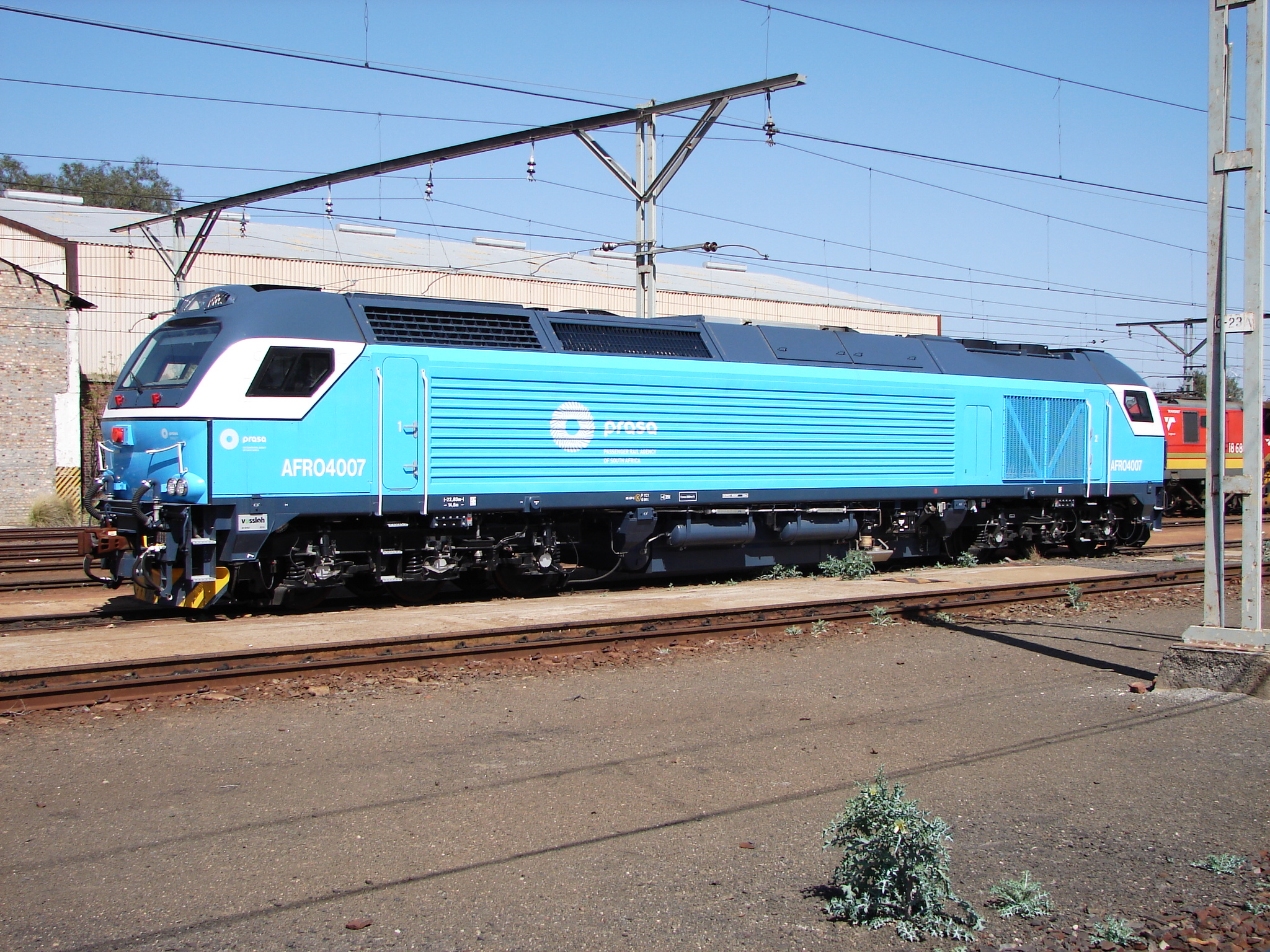
The too-tall “AFRO-4000” locomotive was supplied to PRASA by Spanish rail company Vossloh España, via Swifambo, a front company. A complaint against Swifambo was first filed in 2015. Photo: Col André Kritzinger, CC BY-SA 3.0
On 18 August 2026, I sat through nearly ten hours of the Standing Committee on Public Accounts (SCOPA) hearing from the Special Investigating Unit, the Hawks and the National Prosecuting Authority on referrals and prosecutions. Members drifted out as the day wore on. One searched for holidays in Muscat as I sat behind him.
The last question of the day was put by the chairperson, Songezo Zibi, and it was the one we had come for: what has happened to Swifambo and Siyangena, the two contracts at the centre of state capture at the Passenger Rail Agency of South Africa (PRASA), worth more than R6-billion between them?
The answer: Nothing. No prosecutions in either matter.

The Hawks say the cases are “still under investigation” and the forensic firms needed to do the work have not been appointed. Their procurement, we were told, is at bid adjudication.
These matters entered the public domain in 2015.
The one PRASA conviction the SIU could point to was Daniel Mthimkhulu, the matriculant who called himself a doctor of engineering and signed off on locomotives too tall for our tracks. He is in prison for lying about his qualifications. Nobody is in prison for the money. The entire exchange on Swifambo and Siyangena lasted 13 minutes.
We have been here before
#UniteBehind began its work against state capture at PRASA in July 2017. Since then, we have written to every SCOPA chairperson. We have made submissions and asked to be heard. We have handed over our research, court papers and the documents in our possession. On 3 August this year we wrote again, with specific demands and a deadline. The deadline passed without a reply. Now in September, we will write one final time.
I want to be fair to SCOPA. It is drowning in malfeasance from every level of the state, and it must prioritise. And SCOPA has not been the worst offender. That distinction belongs to the Portfolio Committee on Transport, which in 2017 and 2018 spent its energy attacking the lawyers who had uncovered the corruption rather than the people who committed it, and whose chairperson later told the Zondo Commission that she “toed the party line” when an inquiry was called for. It belongs to the Joint Ethics Committee, which has sat on our complaints against six Members of Parliament implicated at PRASA since 2022, forcing us into three years of litigation in the Western Cape High Court against Parliament’s own trench lawfare.
But SCOPA’s record is not clean. In November 2016 an ANC member reminded the committee that it had the power to summon Lucky Montana. It never did. In February 2020 the Committee resolved to seek delinquent-director proceedings against PRASA’s former boards and to hold a full parliamentary inquiry. Neither happened. Across a decade, SCOPA has never called a single one of the people whom the Public Protector, National Treasury’s forensic investigators, the courts and the Zondo Commission identified as central to the looting: not Sfiso Buthelezi, not Montana, not Makhensa Mabunda, not Roy Moodley, not Mario Ferreira. Two of them sat in Parliament while SCOPA heard evidence about them.
The evidence is not the problem
The excuse cannot be a lack of evidence. There is almost too much of it.
The Public Protector’s report, Derailed, came out in 2015. The Auditor-General has recorded irregular, fruitless and wasteful expenditure at PRASA in the tens of billions, year after year. National Treasury commissioned thirteen firms to investigate PRASA’s contracts; their reports recommended criminal charges against the former board chairperson and the former CEO, and to our knowledge they have never been placed before SCOPA. Werksmans investigated more than sixty contracts at a cost that became the subject of parliamentary obsession, while the findings themselves were never called for.
The High Court set aside the Swifambo locomotive contract in 2017 and the Siyangena contracts in 2020; the Supreme Court of Appeal confirmed both. And the Constitutional Court correctly turned the appeals down.
In May 2017 PRASA itself went to court to compel the Hawks to finish the Swifambo and Siyangena investigations. The founding affidavit of Popo Molefe runs to 350 pages and records, meeting by meeting, how the Hawks lost investigating teams, abandoned their own plans, ignored letters to their national head and left a forensic cash-flow analysis uncollected for months. The Hawks responded by spending a year disputing whether Molefe had the authority to sue them. The court called that “irresponsible and wasteful” and ordered punitive costs. Then PRASA’s new board let the case die. Open Secrets had to bring the same application again in 2025.
And there is the persecution of the whistleblowers: Martha Ngoye, Fani Dingiswayo, Tiro Holele, Yvonne Paige and the late Ernest Hendricks, whose treatment is documented in judgment after judgment, and in the record of the Judicial Service Commission on Judge Nana Makhubele, now before Parliament for impeachment.
Every one of these institutions has reached the same conclusion: the systematic destruction and “loss” of PRASA’s records — board minutes, tender files, payment records, audio recordings — was not administrative failure. It was the method.
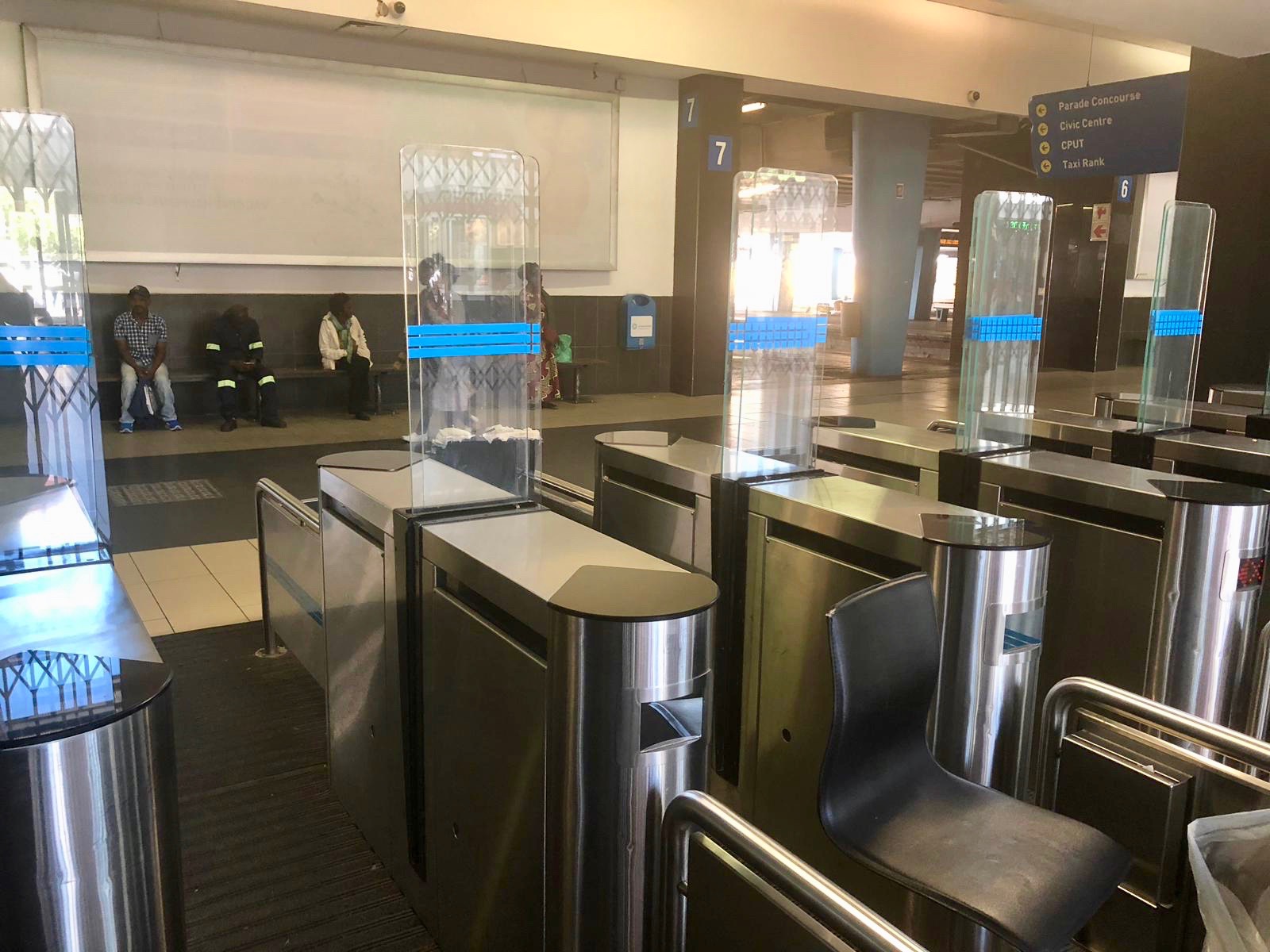
Vast sums were spent on Siyangena Technologies’ automated access gates at Cape Town station, but the system did not function properly. Archive photo: Kim Reynolds
What we are asking for
Then Chief Justice Zondo recommended that the President appoint a special commission of inquiry into PRASA. It is one of the few recommendations we disagree with. A new commission would take years and would let Parliament off the hook. The State Capture Commission examined four PRASA contracts. There are more than 200 over R10 million with evidence of corruption. The body with the constitutional duty, the powers of summons and the institutional memory to deal with them is SCOPA.
We demand something limited and concrete.
First, hearings on Swifambo and Siyangena in this session of Parliament. The culprits are known. The offences under the Public Finance Management Act, the Prevention and Combating of Corrupt Activities Act and the Prevention of Organised Crime Act are identifiable.
Second, hearings in the first term of next year into the Siyaya Group contracts and into PRASA’s security contracts from 2004 to today. Security is where the corruption at PRASA has cost lives: the murders, rapes and robberies of commuters, the attacks on staff, the stripping of the Central Line. It is also where the evidence of political rent-seeking is most direct, and it has never been examined by any committee.
Third, in both sets of hearings, the Hawks, the NPA and the SIU must be examined on their own conduct, with a view to removing whatever is obstructing justice and holding accountable those who have, deliberately or negligently, prevented investigation and prosecution for eleven years.
Fourth, SCOPA should share the work with the Auditor-General, the Public Protector, Parliament’s own legal advisers and, yes, the Portfolio Committee on Transport, and it should use the research that civil society has spent nine years assembling.
We expect the SCOPA Chairperson Songezo Zibi to reply to these demands mid-September indicating when the hearings will be held and when we may be heard. We are ready to appear on any date, with documents, chronologies and witnesses.
I have been doing this kind of work for 50 years. In the struggle for liberation from apartheid and capitalism since 1994, my comrades and I learnt that the state does not act because the evidence is overwhelming. It acts because people refuse to let the matter drop. The people who ride PRASA’s trains, and the people who used to ride them before the system was looted into collapse, have waited eleven years. SCOPA has the power to end the waiting. The question is whether it will use it.
Views expressed are not necessarily those of GroundUp.
Support independent journalism
Donate using Payfast

Don't miss out on the latest news
We respect your privacy, and promise we won't spam you.
Next: Informal settlements are here to stay. Let’s upgrade them
Previous: Minister of Agriculture takes action against vaccine company boss
Letters
© 2026 GroundUp. This article is published under the GroundUp Republication Licence Version 1.0. Email [email protected] to request permission to republish.