
Informal settlements are here to stay. Let’s upgrade them
Upgrading informal settlements is a cheaper and more effective way to improve lives
 Add GroundUp on Google
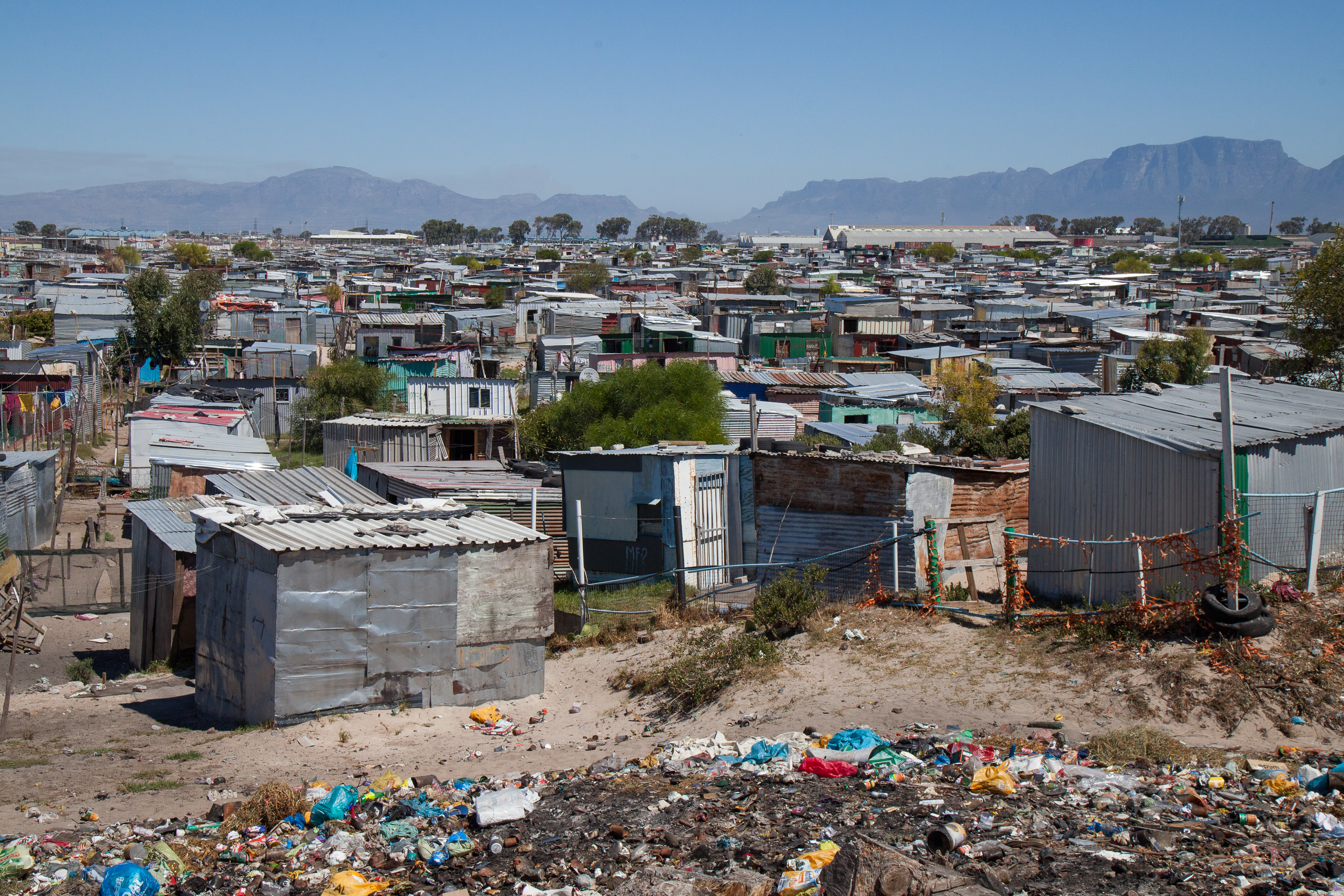
Thousands of people live in Marikana informal settlement in Cape Town. Archive photo: Ashraf Hendricks
Since 1994, the government has built more than three million subsidised homes. But at least two million households are still waiting for formal housing.
Upgrading informal settlements by providing serviced stands for the residents to build on is a cheaper and more efficient alternative to the brick-and-mortar RDP or Breaking New Ground (BNG) houses. It has an immediate impact: cleaner water, safer sanitation, improved waste removal and better living conditions.
Informal settlements are unplanned and characterised by makeshift structures. Residents often have no access to basic services. They live with inadequate sanitation, limited access to clean water, exposure to liquid and solid waste, unsafe electricity, and lack the security of legal tenure.
Housing and health are directly linked. Inadequate housing exposes people to pollution and environmental hazards. Exposure to solid waste and contaminated water contributes to illnesses. For younger children, such hazards are linked to long-term reductions in cognitive ability and increased mortality. For older children, they lead to school absences, among other harms.

Improvements in housing can lead to measurable gains in health, including reductions in diarrhoeal disease and better mental health.
The government’s average R5-billion annual allocation for upgrading informal settlements, if fully spent, could deliver basic services to a far larger number of households at half the cost of building new homes.
South Africa’s post-apartheid housing programme has been among the most ambitious in the world. The General Household Survey for 2025 reveals that approximately 84% of households live in formal housing, compared to the 65% recorded in the 1996 census. About 18% of South African households live in government-subsidised housing.
Yet only 23,000 brick-and-mortar RDP/BNG houses were built in the 2025/26 financial year, compared to 235,635 in 1998/99. This is partly due to political infighting, social unrest, and construction mafia intimidation, which have stalled projects, driven contractors off sites, pushed up delivery costs and turned procurement into running the gauntlet.
Chronic underspending may have influenced the National Treasury to cut housing budgets. The stock of well-located, serviceable land has also been largely depleted, and municipalities are running out of water, sewer and electricity capacity to connect new housing.
Subsidised housing has also become more expensive due to increases in material costs, and the increasing size of a standard house since the 1990s.
The current maximum subsidy per BNG house is about R286,300. Building BNG houses for two million households currently in need of housing would cost over R500-billion – more than 20 times the Department of Human Settlements’ entire budget this year. The department’s target this year is to build 39,000 houses.
The RDP approach of building new homes on vacant peripheral land has also replicated apartheid’s spatial patterns, locating poor people far from jobs, services, and municipal infrastructure.
All these factors have forced a rethink of the initial model.
As early as 2004, there was already growing recognition that informal settlements could be viewed as established, permanent communities that should be upgraded and improved rather than relocated. This was reflected in the 2004 Breaking New Ground policy, which also introduced the Upgrading of Informal Settlements Programme (UISP).
But in practice, the transition has been slow. Political pressure to deliver large numbers of visible houses, combined with the difficulty of servicing densely occupied settlements, meant municipalities continued relocating residents to peripheral greenfield sites.
Only in 2020 did the government recommit meaningfully to upgrading informal settlements. Funds were ring-fenced through a dedicated Informal Settlements Upgrading Partnership Grant. The grant will be R4.4-billion this financial year, R5.1-billion in 2027/28, and R5.3-billion in 2028/29.
But there are challenges. Access to water and sanitation depends on municipalities, many of which are unable to deliver. Household data suggest only very modest signs of improvement in access since 2019.
Since 2020 the Department of Human Settlements has been underspending on the grant. Over the three financial years from 2021/22 to 2023/24 underspending was 16% on average. Spending rates were better for 2024/25 and 2025/26, although there were significant budget cuts throughout.
Underspending has several causes. Planning is poor, and there is weak technical capacity to produce shovel-ready project pipelines. Implementation is inconsistent across provinces and municipalities.
South Africa’s building standards and planning frameworks were designed for formal, once-off construction, not incremental upgrading. Creating the necessary flexibility would require cross-departmental coordination that has so far proved elusive.
The contrast with Nairobi is instructive: in Huruma settlement, the city council’s decision to declare a special planning area exempting it from standard regulations was a critical enabling act, allowing families to expand their dwellings incrementally over time as resources permitted. No equivalent flexibility exists in South African law.
The political economy of upgrading is complex. Upgrading generates losers: de-densification to make space for roads and services displaces some households to benefit others, generating grievances that can fracture community support and stall projects.
Additionally, decades of RDP promises have conditioned communities to equate housing delivery with brick houses. A 2024 assessment of the Thembalethu UISP project in George found that while targets were met, residents felt shortchanged because they wanted a brick house.
This resentment has not been debated or addressed sufficiently, and the persistent public expectation of a brick house is likely to remain a stumbling block.
Lastly, upgrading is gradual, spread thin across many places, and hard to photograph, though measurable. In a political system still oriented around visible delivery, this may be one of upgrading’s greatest vulnerabilities.
The UISP largely does not fund the top structure itself. Rather, it gives beneficiaries each a serviced site in informal settlements that is connected to water and other utilities. While it can be combined with other subsidies to build a house on the serviced site, this is seldom communicated clearly to residents, and owners are left without structured support to build their own houses.
The question is no longer whether upgrading is the right approach. It is whether South Africa can build the institutional capacity – including the planning, the procurement, the implementation, the political will – to deliver it at the scale the backlog demands.
Prof Ronelle Burger and Dr Eldridge Moses are academics at the Department of Economics at Stellenbosch university.
Views expressed are not necessarily those of GroundUp.
Support independent journalism
Donate using Payfast

Don't miss out on the latest news
We respect your privacy, and promise we won't spam you.
Next: Prisoners of poverty: unaffordable bail keeps thousands behind bars
Previous: 11 years, R6-billion later: Parliament must hold hearings on state capture at PRASA
Letters
Dear Editor
Thank you for highlighting important issues affecting our country.
I suggest investigating the economic activity surrounding informal settlements, land occupation and informal housing. These are personal observations, not facts, but they warrant verification and public scrutiny.
While many residents face genuine hardship, there may also be informal markets involving the construction, sale and rental of structures. Some individuals may control multiple structures, raising questions about who benefits financially from land occupation and whether the need for housing is being exploited.
Other issues worth examining include:
- Movement between provinces to access housing.
- The sale, transfer and rental of informal structures.
- Informal rental markets and who controls them.
- The resale or rental of RDP houses.
- Possible fraud or abuse in housing allocations.
- Organised land occupation for financial gain.
- The distribution of emergency relief.
- Long-standing residents remaining on housing waiting lists.
- Whether housing databases are updated and independently audited.
- Accountability among officials, intermediaries and community leaders.
The relationship between service protests, disruption to livelihoods and infrastructure, and later emergency assistance after disasters also deserves scrutiny. Relief should reach vulnerable residents rather than organised groups.
I encourage GroundUp to follow the money, examine housing records, speak confidentially to residents and distinguish verified evidence from allegations and personal testimony.
I was born, raised and still live in Cape Town. These concerns relate to fairness, accountability and the use of public resources. I welcome a balanced investigation involving residents, municipalities, housing officials and independent experts.
Dear Editor
Not only upgrade informal settlements, but also establish a law, whereby the ownership of all land occupied by informal housing (including all land situated within the tribal lands) would vest in the names of the people occupying such land. This would help ensure that everybody who occupies land informally in South Africa, whether such land is located inside or outside of the tribal lands, would become the legal owner thereof, without requiring transfer of the land.
© 2026 GroundUp. This article is published under the GroundUp Republication Licence Version 1.0. Email [email protected] to request permission to republish.